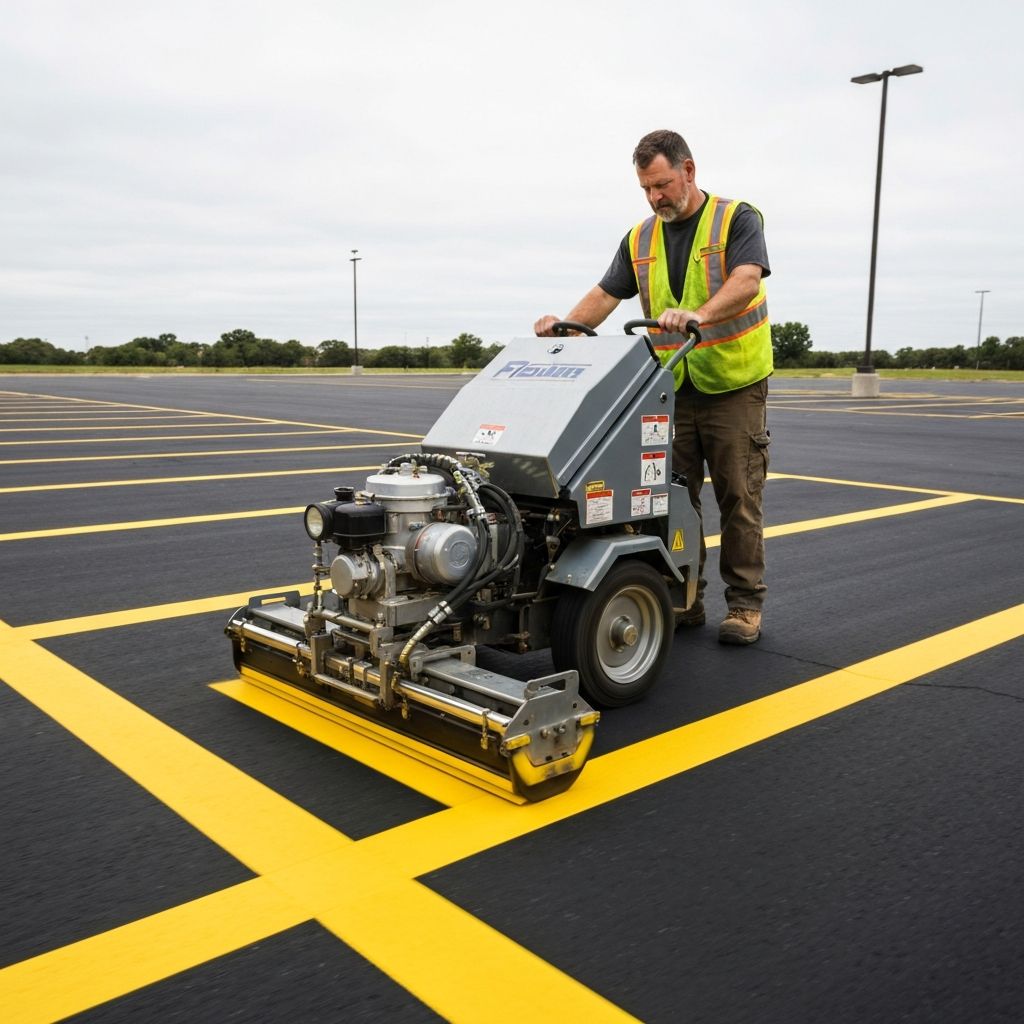
Parking lot striping is more than just paint on asphalt—it plays a critical role in safety, organization, and the overall functionality of a commercial property. Clear, visible markings guide drivers, protect pedestrians, and ensure that your parking lot operates efficiently. For businesses, maintaining well-defined striping is not optional; it directly impacts customer experience, legal compliance, and even revenue.
Despite its importance, many property owners and managers overlook parking lot striping until it becomes a problem. Faded lines, unclear markings, and poor layout can create confusion, reduce parking capacity, and increase the risk of accidents. Knowing when to restripe your parking lot is essential for avoiding these issues and maintaining a professional appearance.
General Timeline
Most commercial parking lots require restriping every 18–24 months. This is considered a standard maintenance cycle for properties with moderate traffic and typical weather exposure. However, this timeline is not fixed and can vary significantly depending on several factors.
For example, parking lots that experience heavy daily traffic—such as shopping centers, hospitals, and office complexes—may require restriping as often as once per year. On the other hand, smaller properties with limited usage may be able to extend their striping cycle beyond two years.
Another important consideration is the type of paint or material used during the original striping. Higher-quality paints and thermoplastic materials tend to last longer and maintain visibility better over time. Businesses that invest in durable materials often benefit from longer intervals between maintenance cycles.
Why Parking Lot Striping Is Important
Parking lot striping serves multiple purposes beyond simple visual organization. It helps define parking spaces, directs traffic flow, and ensures compliance with safety regulations. Without clear markings, drivers may park inefficiently, block access lanes, or create hazardous situations.
Proper striping also maximizes the number of usable parking spaces. A poorly marked lot can reduce capacity and lead to congestion, especially during peak hours. For businesses that rely on customer traffic, this can directly impact revenue and customer satisfaction.
In addition, clearly marked parking lots improve accessibility for individuals with disabilities. ADA-compliant striping ensures that accessible parking spaces are properly designated and easy to identify, helping businesses meet legal requirements and provide equal access to all visitors.
Signs It's Time to Restripe
Recognizing the signs that your parking lot needs restriping can help you address issues before they become serious problems. One of the most obvious indicators is fading paint. When lines become difficult to see, drivers may struggle to park correctly or navigate the lot safely.
Other signs include chipped or peeling paint, which can occur due to weather exposure, traffic wear, or poor initial application. Over time, even high-quality paint will begin to degrade, making restriping necessary.
Customer feedback is another important signal. If visitors or employees report confusion about parking spaces or traffic flow, it may indicate that the markings are no longer effective. Additionally, changes in traffic patterns or property layout may require updated striping to reflect new conditions.
Finally, compliance issues can arise if accessibility markings or fire lanes are no longer clearly visible. Failing to maintain these markings can result in fines or legal complications, making regular inspections essential.
Factors That Affect Longevity
Several factors influence how long parking lot striping will last. Traffic volume is one of the most significant. Areas with constant vehicle movement—such as entrances, exits, and main drive lanes—experience faster wear than less frequently used spaces.
Environmental conditions also play a major role. Prolonged exposure to sunlight can cause paint to fade, while rain and moisture can weaken adhesion over time. In colder climates, snow plows and de-icing chemicals can damage markings and accelerate wear.
The condition of the asphalt surface is another key factor. Smooth, well-maintained pavement allows paint to adhere more effectively, while cracked or uneven surfaces can cause premature deterioration. Regular asphalt maintenance can help extend the life of your striping.
Finally, the quality of materials and application techniques used during the initial striping process can significantly impact durability. Professional contractors use specialized equipment and high-quality materials to ensure long-lasting results.
Cost Considerations
The cost of restriping a parking lot varies depending on the size of the property, the number of parking spaces, and the complexity of the layout. Small parking lots may cost a few hundred dollars to restripe, while larger commercial properties can require several thousand dollars.
Although restriping represents an ongoing expense, it is a relatively small investment compared to the potential costs of neglecting maintenance. Poor striping can lead to inefficient use of space, increased accident risk, and potential liability issues, all of which can be far more expensive in the long run.
Businesses can reduce costs by scheduling regular maintenance rather than waiting until markings are completely worn away. Preventative maintenance is typically more affordable and ensures that the parking lot remains functional and visually appealing.
Cost-Saving Tips
There are several strategies businesses can use to extend the lifespan of their parking lot striping and reduce maintenance costs. One of the most effective is using thermoplastic markings in high-traffic areas. While these materials are more expensive upfront, they can last three to four times longer than standard paint.
Scheduling striping during optimal weather conditions is another important factor. Ideal conditions typically range between 50°F and 85°F with low humidity. Applying paint under these conditions helps ensure proper adhesion and longer-lasting results.
Regular cleaning and maintenance can also improve durability. Removing debris, oil stains, and dirt from the surface before painting allows the paint to bond more effectively with the asphalt.
Best Practices for Long-Term Maintenance
To keep your parking lot in optimal condition, it is important to establish a regular maintenance schedule. Conducting periodic inspections allows property managers to identify fading or damage early and address issues before they worsen.
In addition to restriping, maintaining the asphalt surface is essential. Filling cracks, repairing potholes, and sealing the pavement can help extend the life of both the surface and the striping.
Working with experienced contractors ensures that striping is applied correctly and meets all necessary regulations. Professional services provide consistent results and reduce the likelihood of premature wear.
Conclusion
Parking lot striping is a vital aspect of property maintenance that should not be overlooked. By understanding how often to restripe and recognizing the factors that affect durability, businesses can maintain safe, efficient, and visually appealing parking areas.
Regular maintenance not only improves safety and organization but also enhances the overall customer experience. Investing in high-quality materials and professional services can help ensure long-lasting results and reduce long-term costs.
Ultimately, staying proactive with parking lot striping allows businesses to protect their property, comply with regulations, and create a positive impression for every visitor.
